
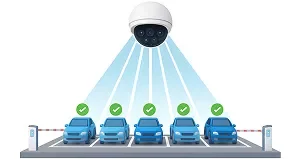
Indoor coverage
One camera can monitor up to six spaces simultaneously.
Cameras watch individual spaces and report what is in them — plate, vehicle, and how long it has been there. One indoor camera covers six spaces, so occupancy, overstays, VIP zones and reservations all run from the same hardware that reads your lanes.
Measured per space
A parking guidance and occupancy system that watches individual spaces with cameras — plate, vehicle and duration for every bay, from the same platform that reads your lanes. No pucks in the ground, no batteries to change.
One ceiling-mounted guidance camera covers three bays on each side of the aisle.
No cutting, sealing or battery cycle — a camera on a ceiling or pole instead.
Each bay's state in real time: free, occupied, overstay, VIP, reserved.
Coverage, pre-authorization, VIP zones, alerts, multi-space, reservations, tariffs.
Intelligence beyond the gate
Real-time space monitoring uses license plate recognition and vehicle detection to watch individual spaces as they fill and empty. Indoors or out, it tells you what is parked where, for how long, and what it should be paying — which is the difference between counting cars and running a business.
One camera can monitor up to six spaces simultaneously.
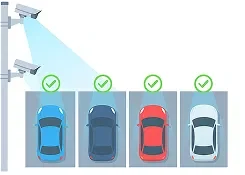
Guidance posts along the row, one per two stalls, with aisle cameras for the other end.
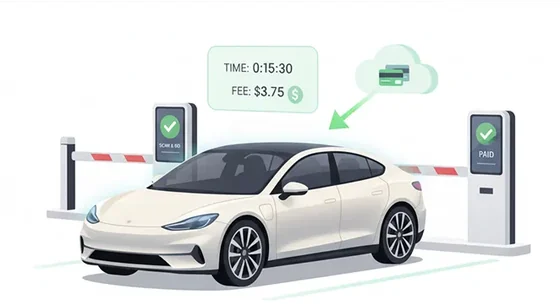
Automated billing based on how long the vehicle stays — no tickets, no hassle.
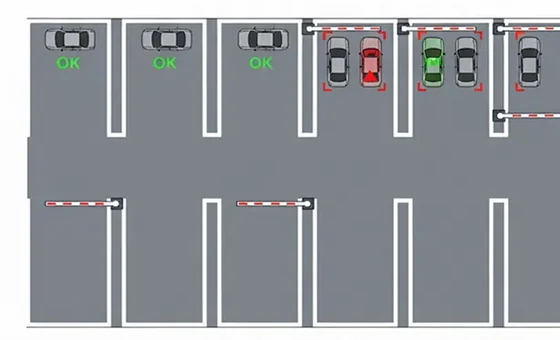
Designate high-value VIP spaces with their own pricing.
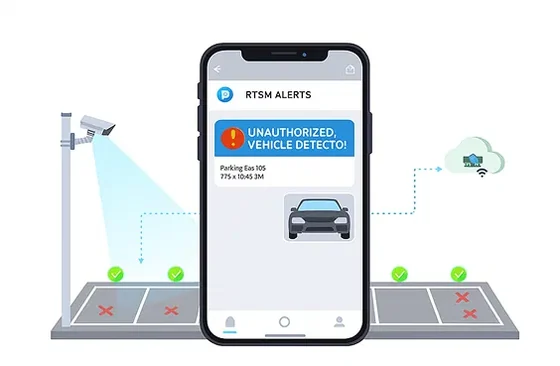
Trigger an alert the moment a car exceeds its allotted time, for quick enforcement.
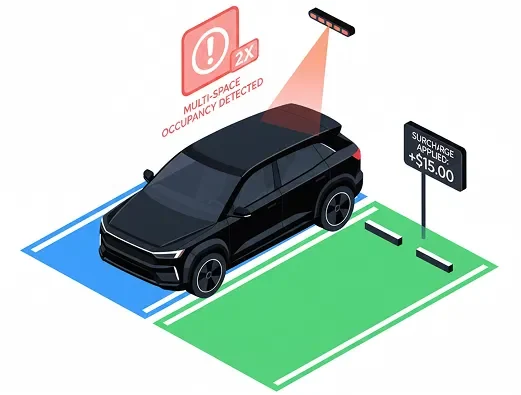
Detect a vehicle taking more than one space, then alert or surcharge for the extra bay.
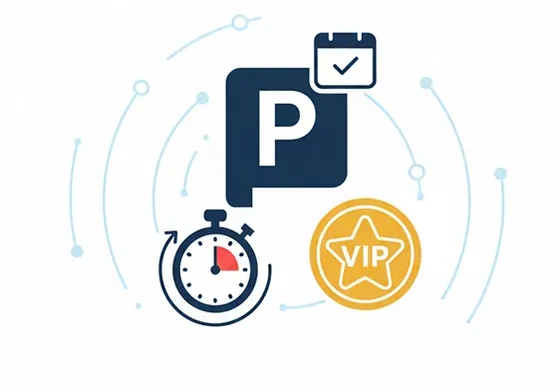
Let drivers reserve spaces in advance — for peak hours, events or VIP customers.
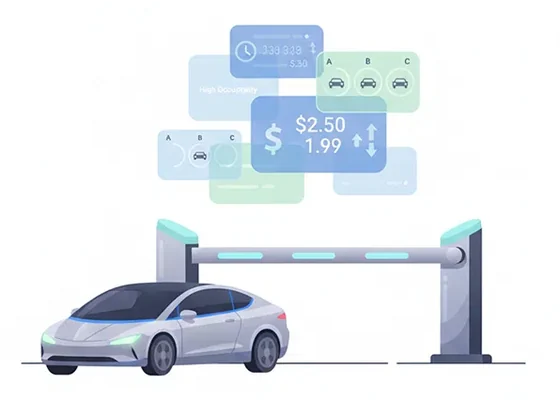
Combine with a gated setup to modulate tariffs by zone, time or occupancy.
How it works
The camera covering that bay picks it up, reads the plate and identifies the vehicle. No sensor in the ground, no app, nothing for the driver to do.
Core marks the bay occupied and starts the clock. VIP and reserved bays are checked against who is entitled to them.
Duration accrues against the tariff for that zone. If the vehicle exceeds its time, or spreads across two bays, an alert fires.
The stay closes, reconciled to the second, and the space returns to the count you can sell.
Rear plates only
Québec, like most of Canada, issues rear plates only. Outdoors, NoctoPark covers the stall from both ends — a guidance post reading from the stall edge, one per two stalls, and guidance cameras in the aisle reading from the other — so the plate is read whichever way the car parks.
A guidance post at the outer edge covers two stalls. A car backed in shows it the plate.
Guidance cameras in the aisle ceiling or on a mast cover the row from the front. A car nosed in shows them the plate.
Nose-in or backed-in, the rear plate faces one of the two. Stall-level occupancy, pricing and reservations work on rear-plate-only lots.
Why operators buy it
A lot that is 40% full and a lot that is 95% full are not the same product, and pricing them the same leaves money on the table. Live occupancy is what lets you price them differently.
Move rates with real demand by zone, time or occupancy, instead of by the clock alone.
Price the covered, the closest and the widest bays for what they are actually worth.
Time that used to run free becomes either revenue or a freed space.
A vehicle across two bays is billed for two bays, or moved.
Sell a space before the driver arrives, for peak hours and events.
Illustrative. Rates step with measured occupancy — the shape of your own curve comes out of your own data.
We publish no percentage for revenue lift, because NoctoPark has no figure it can stand behind. Ask us in the demo and we will walk through your own occupancy instead.
How it compares
Most space monitoring uses a puck sensor buried in each bay. That counts cars. It cannot tell you which car.
| Camera-based (NoctoPark) | In-ground sensors | |
|---|---|---|
| Units to install | One camera per six indoor spaces | One per space |
| Civil works | None — pole or ceiling mount | Cut, set and seal every bay |
| What it knows | Plate, vehicle, duration | Occupied or not |
| Enforcement | Identifies the vehicle that overstayed | Knows a bay is over, not whose |
| Multi-space detection | Sees a vehicle across two bays | Reads two bays as occupied |
| Reservations and VIP | Verifies the right vehicle is in the right bay | Cannot verify |
| Batteries to replace | None | Per unit, on a cycle |
| Also gives you | The lane read, from the same platform | Nothing else |
Technology highlights
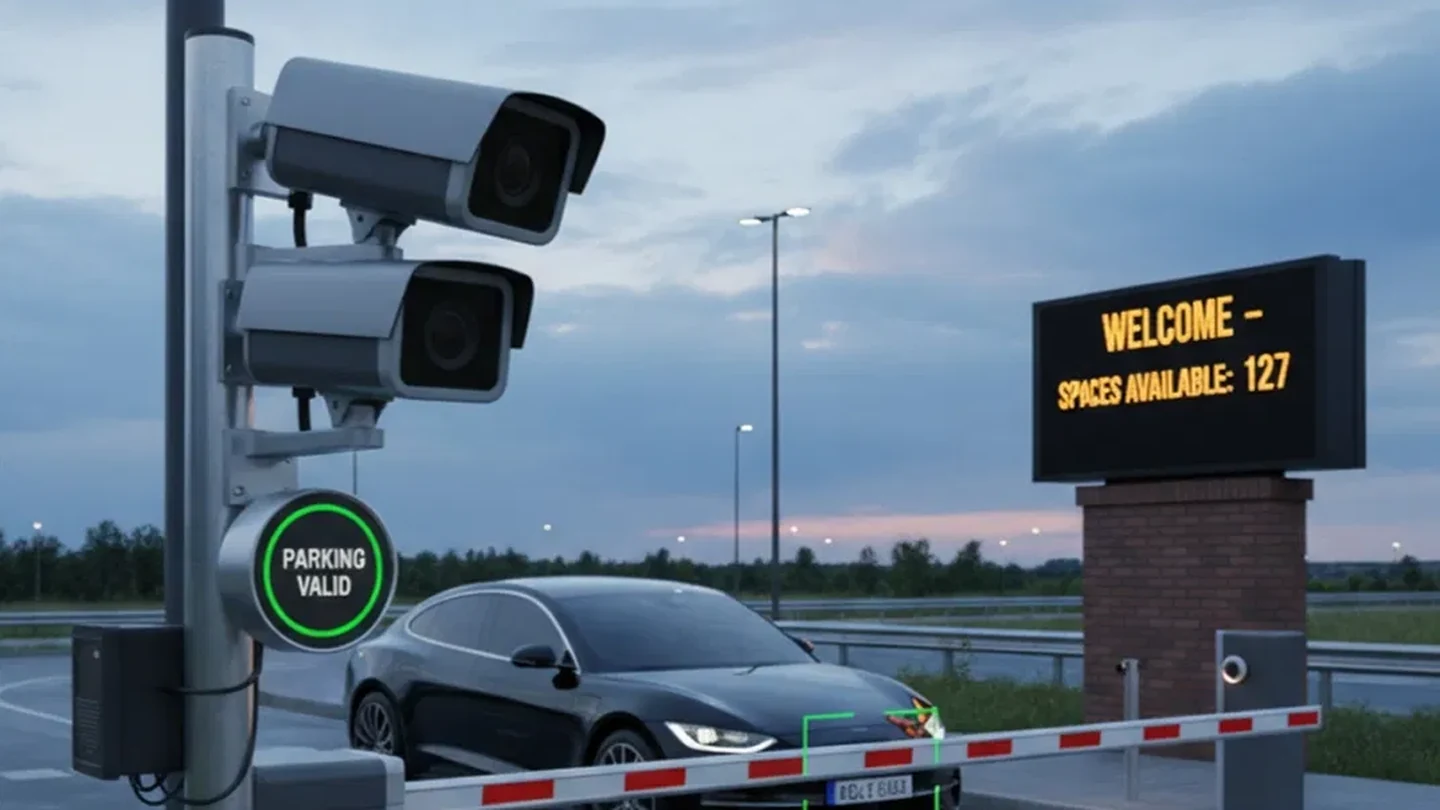
Our 8MP dome cameras combined with our recognition software capture plate data as the vehicle enters, for a ticketless start to the stay.
A network of positioned cameras keeps the vehicle tracked and identified at every point that matters in the lot.
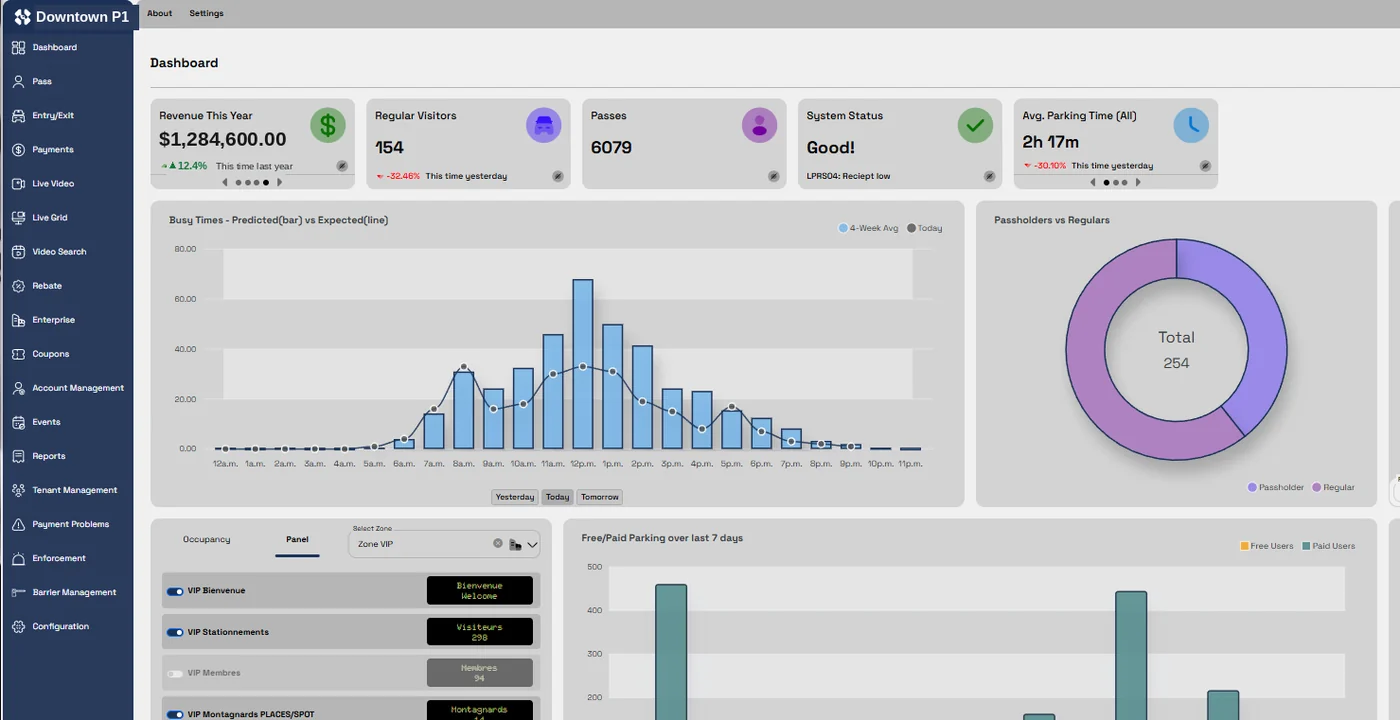
The management system at the centre of the operation: it processes data from every endpoint, prices each stay, and runs transactions and access control.
Integrations
From payment processors to accounting platforms and control centres, NoctoPark integrates with leading systems to keep your operation connected.

Secure monthly automated authentication and transaction routing.

Process payments across any channel or currency.

Centralized command for every device in the operation.
NoctoPark also supports integration with third-party accounting, ERP and hotel systems.
Your NoctoPark partner walks the lot with us and maps which camera covers which bays, allowing for columns, ceiling height and sightlines.
A certified NoctoPark partner installs and calibrates, then each bay is verified against the map.
We set up zones, VIP bays and tariff rules in Core with your team, and activate.
Let's get started
See how NoctoPark automates parking management end to end. Our team will walk you through the solutions and answer any questions you may have.